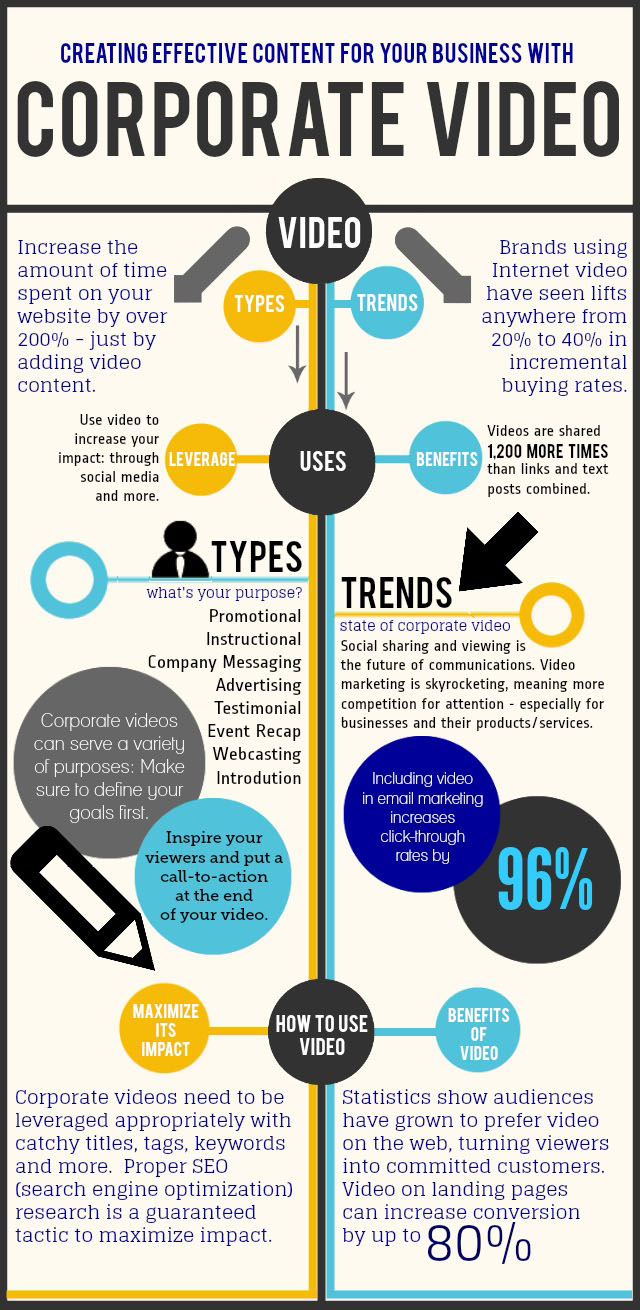
Through several of my earlier posts, I have pointed out how important corporate videos on a website are in attracting customers. From just viewing to actually making a purchase, video can enhance the likelihood of both. And we can make it affordable. This infographic helps tell the story.
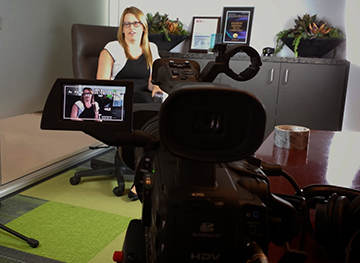
Filmed on October 2 at the Costa Mesa Neighborhood Community Center. This was the last of three “forum-type” events for local City Council candidates to express why they should be elected to office. Included in the group is council member and current mayor, Jim Righeimer.
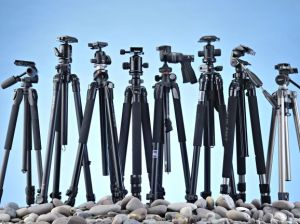
This post is dedicated to people that choose to shoot their own video. On occasion, I have been asked to take on editing assignments where, in order to save cost, a client has provided video footage they’ve captured. Nothing can be more disappointing to any editor than to find hours of footage that is barely usable because of poor camera technique, including pans, tilts, zooms and rack focus, that are caused primarily due to an unstable base from which to shoot. And while I too have watched “Modern Family” and “The Office” which popularized the “mockumentary” style of cinematography, with “whip pans” and “snap zooms,” I would argue that stable videos with smooth movements are far less jarring to the eyes. For the do-it-yourselfer, there is a simple solution: a sturdy tripod!
Tripods have been around since cameras were the weight of a Volkswagen—and almost as big, and you needed a very strong platform to support them. Now, cameras are super small and we’ve all seen them integrated into today’s smartphones and even watches. Are tripods going the way of the dodo as a result? No!
Think about this: Say you’re watching your son or daughter singing in the school choir and you’re in your seat 50 rows away from the stage trying to capture the proud moment when your child steps forward for a solo. You’ve got your Galaxy or iPhone zoomed all the way out and now your body starts to shake from fatigue in the hands and arms. You get home to see what you captured, only to discover a blurry mess because you weren’t able to keep the device steady. Bummer!! And don’t be fooled by the claims of the device’s manufacturer about “image stabilization.” At high zoom settings, any body movement will be amplified, so give yourself the best chance of getting the shot right, and use a tripod.
Tripods come in many shapes, sizes and price points, but to not use one is to invite disappointment. At the very least, get one with strong legs and a “fluid head” so that camera movement is as smooth as possible. Also make sure the tripod’s head can lock. Nothing will cause more panic than being 10 feet away from your camera when it topples over because the head wasn’t locked and the whole rig became unbalanced. The good news is that tripods can accommodate most any camera made today, including the aforementioned smartphones and watches.
The takeaway: Make the investment in a good tripod…your videos will be much better because of it!
In the nearly two decades the internet has been around as a marketing vehicle, a concept has recently emerged, gaining broad application on the web: explainer videos. These videos are utilized by businesses to augment or enhance other more traditional forms of marketing and advertising. Running for one to two minutes’ duration (and rarely longer), explainer videos are used to present a new company or product or service and explain why a consumer should use it. These are often presented in a more casual framework, deliberately keeping the message short while generating interest in what they are promoting.
One of the best explainer videos of all time comes from the Dollar Shave Club. I saw it for the first time a couple of years ago, and it’s just as funny today as when I first watched it (see “Traffic” below). It is edgy (they use the “f-bomb” although bleeped out) and probably appeals to a younger demographic, but it captures the essence of an explainer video—and they nail it in 1 minute and 33 seconds!
Explainer videos offer a number of advantages to those who use them. Here are a few ways they can help benefit your business, product or service:
–Engagement:
Rather than using simple text or pictures to market and advertise, explainer videos can spark more consumer interest that grabs their attention with a simple message and explanation of a product. People are usually more attuned when they can just watch short clip rather than read a short passage or analyze it through one still image.
–Shareable:
When people like an explainer video and find it helpful, they share it, sending the links to your videos across the web to those they know. Many who may watch a specific explainer video probably have friends and acquaintances that share similar interests including the product or service being described.
–Retention:
It has been well documented that visual imagery generates far greater retention than written or audio standing alone. Accordingly, an explainer video helps make the message and product stick in a person’s mind, making them more likely to share the information with others. Oh, and make ‘em laugh and it will add to the retention factor!
–Optimization:
When people watch a video that explains a product or service and why it would be of benefit, it becomes a point of conversation. These videos network independently because they can be shared and talked about by those who have viewed them. More to the point, it’s a fact that text heavy websites may not come up in the top search results on search engines and directory listings. Video can be “tagged” and affixed with keywords, which will put your website and products in a much stronger light for Google, Yahoo, Bing, and potential customers!
–Traffic:
The term “going viral” is ubiquitous today and a compelling explainer video can trigger the kind of response that can send it…well, you know, viral! A number of products have benefitted exponentially through the clever use of this medium.
So there you have it. Deploy these ideas in the production of your next explainer video, and if you need a hand, we’ll be happy to lend a few of ours!
PS: To be sure, there are plenty of uses for longer form videos—and I will address them in a future post.
As a videographer, I have watched changes in equipment happening at a dizzyingly rapid rate over the years. SD to HD to 3D to 4K…DSLRs, GoPros, drones and other pieces of equipment and these transitions have taken place just in the last few years!! What’s a person to do?!? One thing’s for sure: You could go (and stay) broke trying to keep up! Besides, you might have the latest and greatest “gizmatchit” but in the end, it still comes down to the creative skill you possess when you look through the viewfinder. And regardless of the gear I use (I do confess to having all HD equipment nowadays!) my clients hire me because I am able to interpret their requests and deliver a finished product that we are both happy with.
One of the things that has occurred in all this change is the type of delivery medium being used. For years—if not decades, the delivery medium of choice has been the ubiquitous DVD. Now even that little plastic platter is facing potential extinction as consumers are asking for their deliverables in formats other than DVD. Even Adobe with their incredible “Creative Cloud” series of applications is unbundling and discontinuing Encore—their DVD authoring program—from their editing app, Premiere Pro.
The fact is that there are a number of options available and since it is my job to deliver in a manner and medium desired by the client, I am very open to these alternatives. As the cost of storage media continues to drop and with the advent of “cloud-based” storage, I can get your finished product to you pretty much any way you want. Here are just a few examples, keeping in mind that you still must have an application that will play the video file (with the exception of sharing or streaming services that have playing capability built-in):
DVD (let’s start with the obvious)
CD (yes, you can use a CD, so long as the file is small and will fit the 700MB limitation!)
USB flash drive
SD or CF cards (or their variations)
Dropbox, Google Drive, OneDrive, Box, Copy and others
Sharing services like YouTube, Vimeo, Instagram and others
Live Streaming
According to industry website Doddle, wedding and event videographers, and even attorneys (for depositions and other types of legal videography) still desire—and sometimes require—DVDs. That said, I have used every one of the alternatives listed in the bullet points, except live streaming. As the price of that technology continues to come down, I can see adding it to my repertoire.
So here’s the question: How would you like your video delivered? I’d love to hear your thoughts! Drop me a note at info@firstimpressionsvideo.com,
As a SPC (Single Person Crew) most of the time, I work hard…which I certainly don’t mind. And because of the effort I put into the work, I just got one of the most remarkable testimonials since starting First Impressions Video. You can see the entire post in the “Leave A Reply” notes area of my home page, or just click this link:https://firstimpressionsvideo.com/comment-page-1/#comment-218.
Yesterday, I had the honor of being the designated videographer for Working Wardrobes’ VetNet Program, for their big event entitled, “Power Up For Success.” The event took place at Camp Pendleton and several dozen Marines and Sailors participated in a full day of presentations and break-out sessions designed to assist with those transitioning to civilian life. Or as CEO/Founder, Jerri Rosen would call it, “helping to create a soft landing.” The capstone of the event was a complete wardrobe consult including outfitting in full business attire. This is extraordinary work being done by an extraordinary organization (that is locally based, by the way) and I would encourage any who would want to participate to do so!
Yesterday, I delivered the final wedding video DVD to my friends Kim and Scott Timmins. In addition to the video of the ceremony and reception were slide shows of both. It was a monster project and the slide shows required keyframing of over 100 pictures to create the “Ken Burns” effect for each one.
Feedback from the couple: “Just watched the video…it is AWESOME!! THANK YOU!! Can’t wait to show our family back east. Love it! Love it!!” And for added measure, they added the emoticon for a big smiley face! I guess you could call that a happy customer!
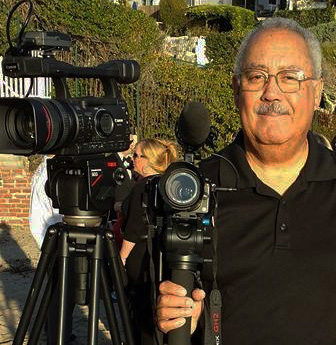
Here’s a shot of me just before going to work. Weddings on the beach can be magnificent, but you get sand everywhere, so I have to use brushes and compressed air to remove the sand out of my gear!
A year ago, I lost my job in internet marketing. Rather than continue in that field, I took a risk and with the blessings of a supportive spouse, started First Impressions Video. After all, if not now…when? It’s been an interesting journey and have worked on a myriad of interesting projects. And while there could have been more jobs, every starting entrepreneur says the same thing. That said, I convey thanks to every customer who entrusted their projects to me, and thanks to Laurie Probasco Wall, for believing in me! And here’s to an even more prosperous year 2!!!
If anyone thinks seniors aren’t tuned into the digital revolution, think again! Americans over 50 have long since embraced all manner of online media, and a majority of Baby Boomers note that viewing videoonline is a daily activity. Gavin O’Malley wrote a comprehensive article in Online Media Daily about this subject that you can read in its entirety here, but here are a few highlights:
“Older consumers are fully invested in digital media,” per Mark Bradbury from AARP.
75% of Boomers and 68% of seniors take some kind of action after viewing a video. From a simple comment to actually purchasing something, they don’t just watch and leave.
Over half (57%) were inspired to visit a retailer and 37% called a business or organization after watching a particular video.
YouTube is the preferred video source among Boomers and seniors
Search is one of the top two online activities, and a whopping 97% of both cite Facebook as their #1 most-used social networking site.
The takeaway: Video is a viable tool to get your business found and everydemographic uses it to find products and services!








 First Impressions Video